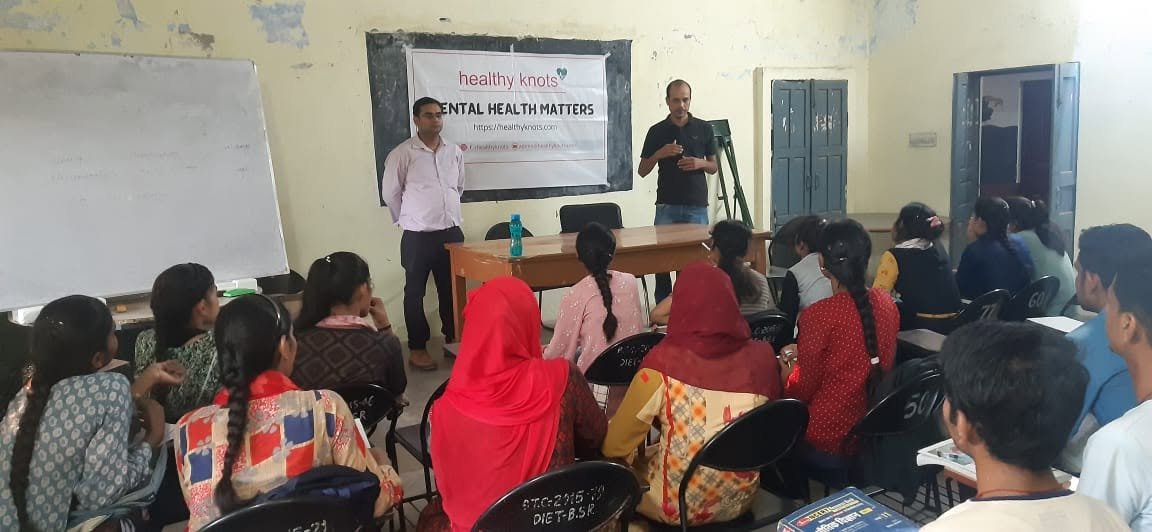
Mental health is not separate from our overall well-being. It influences how we think, feel, learn, work, build relationships, respond to challenges, and make everyday decisions. Yet for many people, mental health is still something discussed only when a crisis occurs.
At Healthy Knots Foundation, we believe that needs to change.
Mental health deserves attention not only during moments of distress, but throughout our lives. Just as we learn about physical health, nutrition, hygiene, and safety, we also need the knowledge and language to understand our emotional and psychological well-being.
Mental Health Is Part of Everyday Life
Mental health does not simply mean the absence of a mental illness.
It includes our emotional, psychological, and social well-being. Stress at work, academic pressure, financial difficulties, loneliness, family conflict, grief, discrimination, uncertainty about the future, and major life changes can all affect how a person feels and functions.
Sometimes these difficulties are temporary. At other times, they may become overwhelming or require professional support.
Understanding this difference matters.
When people have basic mental health literacy, they are better equipped to recognize changes in themselves and others, understand when additional support may be needed, and know where to seek appropriate help.
Silence Can Make Struggles Harder
One of the biggest barriers surrounding mental health is not always the lack of services—it can also be the fear of speaking.
People may worry about being judged, misunderstood, labelled, or dismissed. Someone struggling emotionally may hear phrases such as “just be positive,” “others have it worse,” or “you are thinking too much.”
These responses may be well-intentioned, but they can make a person feel even more isolated.
A better response often begins with something simple: listening.
We do not always need to have the perfect answer. Sometimes creating a space where another person can speak without fear or judgement is an important first step.
Pause. Listen. Acknowledge.
Awareness Is Not Enough
Over the years, conversations around mental health have become more visible. That is important, but awareness alone cannot create lasting change.
People also need practical knowledge.
They should be able to understand common mental health concerns, recognize possible warning signs, challenge myths and stigma, learn healthy coping strategies, find trustworthy information, and know when and how to seek professional support.
This is why Healthy Knots Foundation focuses on mental health literacy.
The goal is not to turn everyone into a mental health professional. It is to help people become better informed, more empathetic, and more capable of responding appropriately when mental health concerns arise.
Mental Health Support Must Reach Everyone
Conversations about mental health cannot remain limited to hospitals, conferences, social media, or large cities.
A student experiencing overwhelming academic pressure, a farmer facing uncertainty, a young person struggling with loneliness, a woman carrying invisible emotional burdens, or a family living in a rural community may experience distress very differently.
Language, culture, economic circumstances, accessibility, and local realities all influence whether someone understands mental health and whether support feels reachable.
Mental health initiatives therefore need to meet people where they are—in schools, communities, workplaces, villages, families, and everyday conversations.
Information should be understandable. Resources should be accessible. And people should be treated with dignity.
Small Actions Can Create Meaningful Change
Improving mental health does not depend only on large institutions or major programmes. Change can also begin in ordinary interactions.
Listening without immediately judging someone, checking in on a friend, learning the signs of emotional distress, avoiding stigmatizing language, encouraging professional help when appropriate, and sharing reliable resources can all contribute to a healthier environment.
None of these actions replaces professional mental healthcare when it is needed. But they can help build communities where seeking support becomes easier rather than something people feel they must hide.
Building a More Mental Health-Literate Society
Healthy Knots Foundation works toward a future where conversations about mental health are informed by understanding rather than stigma and where people have the knowledge to recognize concerns, communicate openly, and find appropriate support.
Our approach is simple:
Break the silence. Build understanding. Make mental health literacy accessible.
Because mental health is not a luxury.
It is not relevant only during a crisis.
It is part of being human—and it is crucial to the health and well-being of individuals, families, and communities.
If you or someone you know is experiencing severe emotional distress or thoughts of self-harm or suicide, seek immediate support from a qualified mental health professional, emergency service, or an appropriate crisis support service in your area.